Tighten API key permissions
SecurityM
When AI accelerates delivery, the bottleneck moves upstream to product decisions.
Telos is built for that work.
Everything in Telos is available to the workflows you already run. Let agents read the plan, file the work, and report what shipped—then bring people into the product when alignment needs a shared surface.
Agents see and change only what you allow. Every action is attributed, and approvals stay with people.
An agent connects to Telos and finds the bug Anna reported. TEL-128 appears in Todo, moves to In review when GitHub pull request 248 opens, and moves to Completed after Maya approves and merges the change.
When delivery stops being the constraint, the upstream work needs its own infrastructure.
Objectives replace feature lists. Leadership commits to the outcome. Teams choose which bets get there.
Every insight names the customer or stakeholder who raised it, plus any priority and any date you committed to them. The team sees what it already rejected, and why, before repeating it.
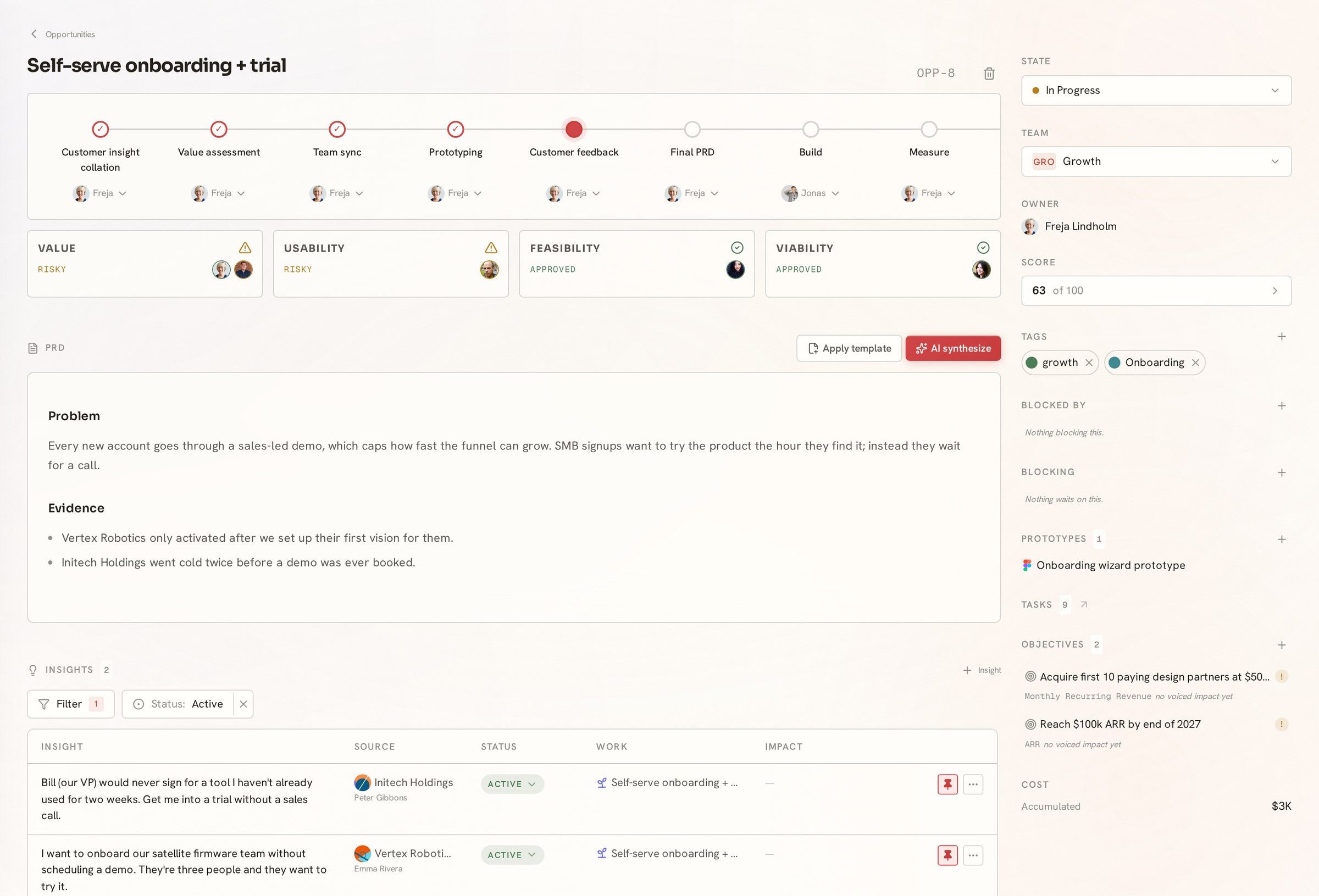
Every template step has a name on it. Reprioritize and the blast radius surfaces before you commit, not after.
One structure runs through Telos. Work descends from purpose, and every task can trace the line back.
The north star the whole company points at. The root every decision descends from.
The number leadership commits to move: one metric, an operator, a target, a deadline.
The evidence. A quote, a number, an observation. Never the work itself, the reason for it.
The bet a team runs toward an objective, chosen from the evidence, not handed down.
The smallest unit of work. Many roll up to one opportunity, each owned and traceable.
Customers are first-class objects: health, lifecycle stage, ARR, the work in flight for them, and every commitment made to them. Assess your whole book in one glance: one screen, with a work-in-progress flyout of the latest updates, blockers, and risks. Developer updates on customer-tied work post to the customer's channel, so customer success sees only updates on work tied to the accounts they manage.
Discovery is a template that product and engineering run together, not a document phase. You define your own SOP for how a feature gets built; Telos enforces the handoffs, so nothing gets dropped. Writing the PRD was never the point: the template nudges you to ask the questions that matter. Do we have proof of value? Have we evaluated the risks? Have we iterated on solutions with customers to make sure we hit the mark? The PRD is just the output of the work that actually matters.
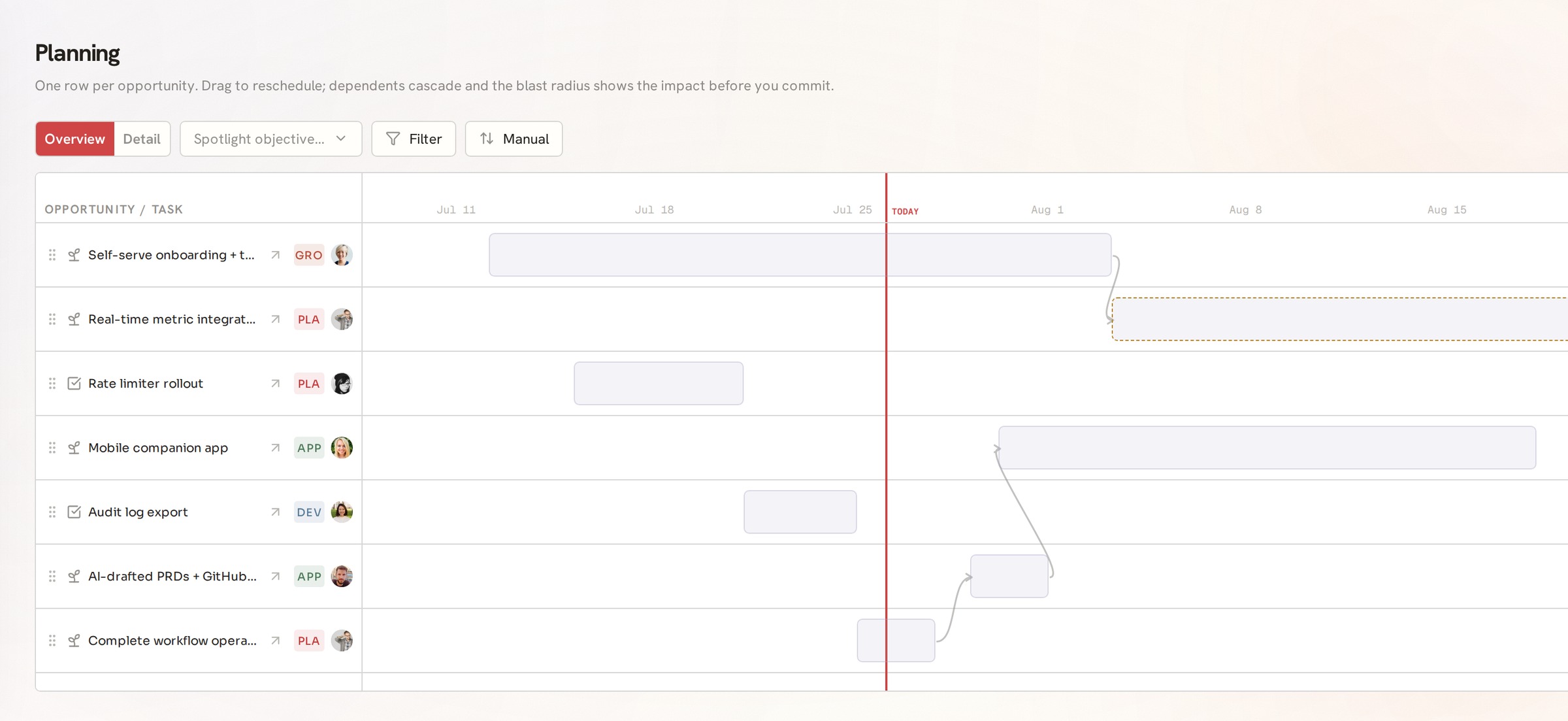
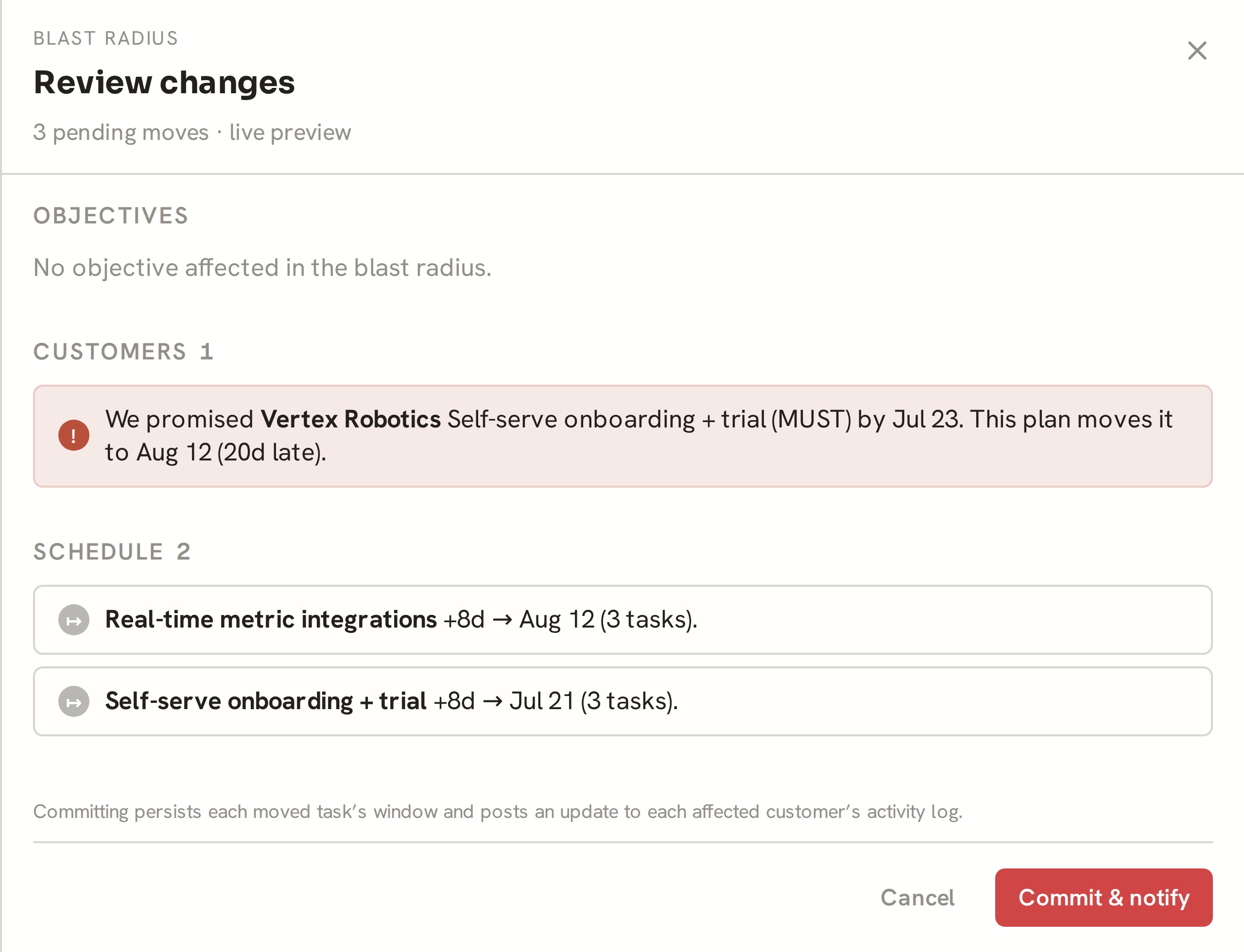
Drag a bar and the blast radius surfaces before you commit: dependents cascade, and every breached customer commitment names the account and the days lost. Commit anyway if it's the right call; the change posts to the customer's page, and nobody is surprised downstream.
Plus a full REST API, webhooks, and an MCP server. Explore the docs.
The ultimate purpose, end goal, or final objective of an activity, system, or object.
Every opportunity and every task should be able to name its telos.